How to Start Freelancing as a Student
Table of Contents

The traditional route to getting work experience has changed a lot in recent years. Students nowadays don't have to wait till they graduate to build those pro skills and start networking with companies. With the rise of remote jobs and the digital marketplace, freelancing is one of the easiest ways for students to get actual hands-on experience while still hitting the books.
If you're into tech, business, marketing, design, writing, or engineering, freelancing offers chances to put your textbook knowledge to use on live projects. You get to work with clients, tackle real business issues, sharpen your communication skills, and collect a bunch of projects that could look great on your resume down the road.
Still, a lot of students are hesitant to jump in. Many think they're missing something – experience, contacts, advanced skills and get swamped by all the freelancing sites, courses, and inspirational tales floating around online.
But here's the thing: every successful freelancer started as a newbie. They didn’t begin with loads of client work or seasoned expertise. Becoming a pro is a process that kicks off with honing a useful skill, boosting your confidence, and just consistently giving it a go.
So this guide breaks down how to start freelancing when you're still a student. It walks you through picking the right skills, building a legit portfolio, landing clients, managing those gigs, and setting yourself up for awesome long-term success.
Why Freelancing Is an Excellent Opportunity for Students
Freelancing offers several perks that make it super appealing for students.
Unlike traditional part-time gigs, you get way more control over your schedule. So instead of being stuck with set shifts, you pick projects that mesh well with your classes, homework, tests, and all your club stuff.
It also lets you build practical experience, which is huge. Today, employers love seeing real-world skills alongside academic credentials. This means freelancing gives students an edge before they step into the full-fledged workforce.
There's also personal and professional growth. When you handle projects, you learn a ton like how to talk with clients, stay organized, fix problems, and adjust to surprises. These abilities will help no matter what field you end up in.
Many students realize freelancing gives them a clear view of their strengths, interests, and career paths. You figure out a lot by diving into various projects from different industries and settings. It’s knowledge you wouldn’t gather just sitting in lectures.
The big benefit? Building a pro portfolio. If you hustle, you could have a neat bunch of finished projects and client work lined up by the time you graduate. Showing this stuff makes you stand out to employers.
Understanding What Freelancing Really Means Getting into freelancing? First off, know what it's all about.
Freelancers are pros working by themselves for different clients on projects or ongoing gigs. Unlike having just one job at a company, freelancers bounce between several clients, calling their own shots.
Freelancing isn't just about ticking off task lists either; it's basically running a teeny business. That means you'll be emailing, dealing with dates, putting together pitches, connecting with folks, and always learning new stuff.
As a student joining the freelancing world, expect to wear lots of hats: client hunter, PR rep, project manager, timekeeper, communicator, creator, and image-builder. It's a lot to handle, but if you dive in with eyes wide open, you're better set up for success.
Choosing the Right Freelance Skill
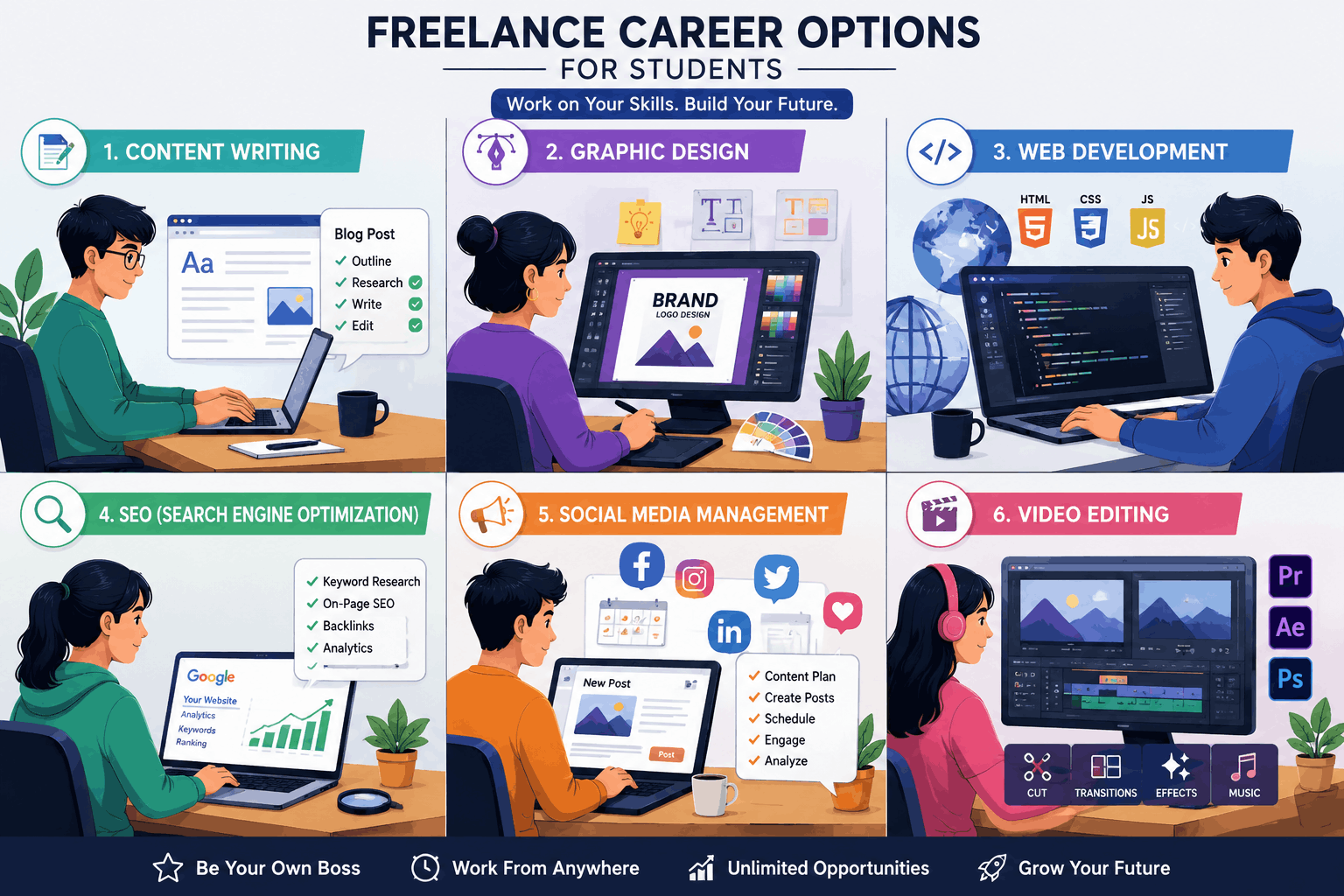
Choosing which service to provide is one of the key decisions you'll face when becoming self-employed.
Many new freelancers try to be writers, website designers, marketers, software developers, and video editors all at once; as a result, they end up making little actual progress because they're confused and learning way too much at once.
Instead of spreading yourself across these numerous areas, narrow your strategies down to just one and concentrate on gaining skill and knowledge in that discipline.
Content Writing
For most aspiring freelance workers, content writing is one of the easiest freelancing skills to get involved in.
There is always a need for businesses to have:
Content for their blog
Content for their website
Content describing products
Landing pages (sales pages)
E-mail newsletters
Content optimized for search engines.
This is an ideal career for students who enjoy researching, storytelling, and an overall written format.
Graphic Design
The role of graphic designer is to help their client businesses communicate visually with customers.
There is a variety of design services provided as a graphic designer, some of the most popular of which include:
Creating logos
Creating graphics for Social Media
Creating marketing material
Creating the brand identity
Creating presentation layouts for the various forms of communication.
If you are a student who enjoys being creative and has an interest in visually communicating, then graphic design could be the perfect avenue for you as a freelancer.
Web Development
Web development continues to be one of the most sought-after freelance skills.
Businesses require websites for marketing, sales, customer support, and brand visibility.
Students can specialize in:
Front-end development
Back-end development
WordPress development
E-commerce development
Website maintenance
Search Engine Optimization (SEO)
SEO involves improving website visibility in search engines.
Businesses invest heavily in SEO because organic traffic can generate long-term results.
SEO freelancers often work on:
Keyword research
Technical SEO
On-page optimization
Content strategy
Site audits
Social Media Management
Brands rely heavily on social media platforms to engage audiences and build awareness.
Freelance social media managers help businesses:
Plan content
Schedule posts
Monitor engagement
Analyze performance
Develop growth strategies
Video Editing
The demand for video content continues to grow across industries.
Businesses, creators, and brands require editors for:
YouTube videos
Educational content
Marketing campaigns
Product demonstrations
Short-form content
Choose a skill that genuinely interests you. Long-term success becomes much easier when you enjoy the work you are doing.
Learning Skills That Clients Will Pay For
Choose a skill to learn and get started with learning that skill well.
It's common for many new learners to get stuck in a learning loop by watching so many tutorials, then never really applying any of their new skills.
Instead of focusing on just learning and never applying your skills you should try to combine learning with practicing those skills.
For example, if you want to become a content writer:
Learn the basics.
Create practice pieces.
Look at some great articles that were successful.
Use the feedback you receive to make improvements.
Have a portfolio of your work.
The same applies to design, development, SEO, and marketing.
You will learn quicker when using hands-on experience ensuring that your new knowledge is actually getting applied to real world situations instead of just passively consuming videos or information!
Clients hire you not based on how many courses you have completed but instead on your ability to help them solve their problems and provide value through delivering results.
Creating a Portfolio Without Client Experience

One of the most significant things that students worry about is their lack of experience with clients.
The good news is that you can build a portfolio without any paying clients.
You can create independent portfolio projects.
Writers can write:
Industry-related articles, blog posts and other types of written communication for a variety of industries.
Designers can create sample design projects and/or samples of their design work.
Developers can build:
Portfolio websites,
Business websites and
Landing pages for clients and interactive applications.
And SEO specialists can help clients perform:
Website audits
Keyword research and
Content optimization examples.
Ultimately, the purpose of doing all of this is to provide evidence of your skills and to show prospective clients what you have the potential of providing.
When it comes to portfolio projects, quality is much more valuable than quantity.
Five strong portfolio projects typically have greater value than 20 average portfolio projects.
Building Your Personal Brand as a Student Freelancer
Freelancing is becoming more reliant on personal branding.
The majority of prospective clients will research an independent contractor before hiring them.
The way you present yourself online will often determine whether or not a prospective client feels confident about your expertise.
Consider starting with a strong professional LinkedIn profile that includes:
Headshot
Strong, succinct headline
Detailed summary
List of skills
Links to your portfolio
Creating a personal website could also be beneficial.
Your personal website can provide a centralized reference point for:
Your portfolio and previous work samples
Services offered
Client testimonials
Contact information
Case studies (if available)
Finally, publishing content online that includes useful information can help build your personal brand.
Some examples of the types of content you could post would be:
Industry insight
Lessons learned
Detailed breakdowns of projects completed
Helpful tips from experience
Ultimately, your visibility will help you gain customers over time.
Choosing the Best Freelancing Platforms
Freelance Platforms give you access to businesses looking for talent actively.
Some of the more common platforms are:
1. Upwork
Is a big marketplace to find work in different markets.
2. Fiverr
Allows you to create a listing of services and find clients more easily.
3. Freelancer.com
Provides project-based work for both beginners and experienced professionals.
4. GigPerHour
Is a platform used by businesses looking for specialized freelancers.
5. Guru
Provides opportunities to work in various career categories.
Freelance platforms are beneficial, but they should not be your only source of clients.
Building a personal brand and expanding your professional network are equally important.
How to Find Your First Client
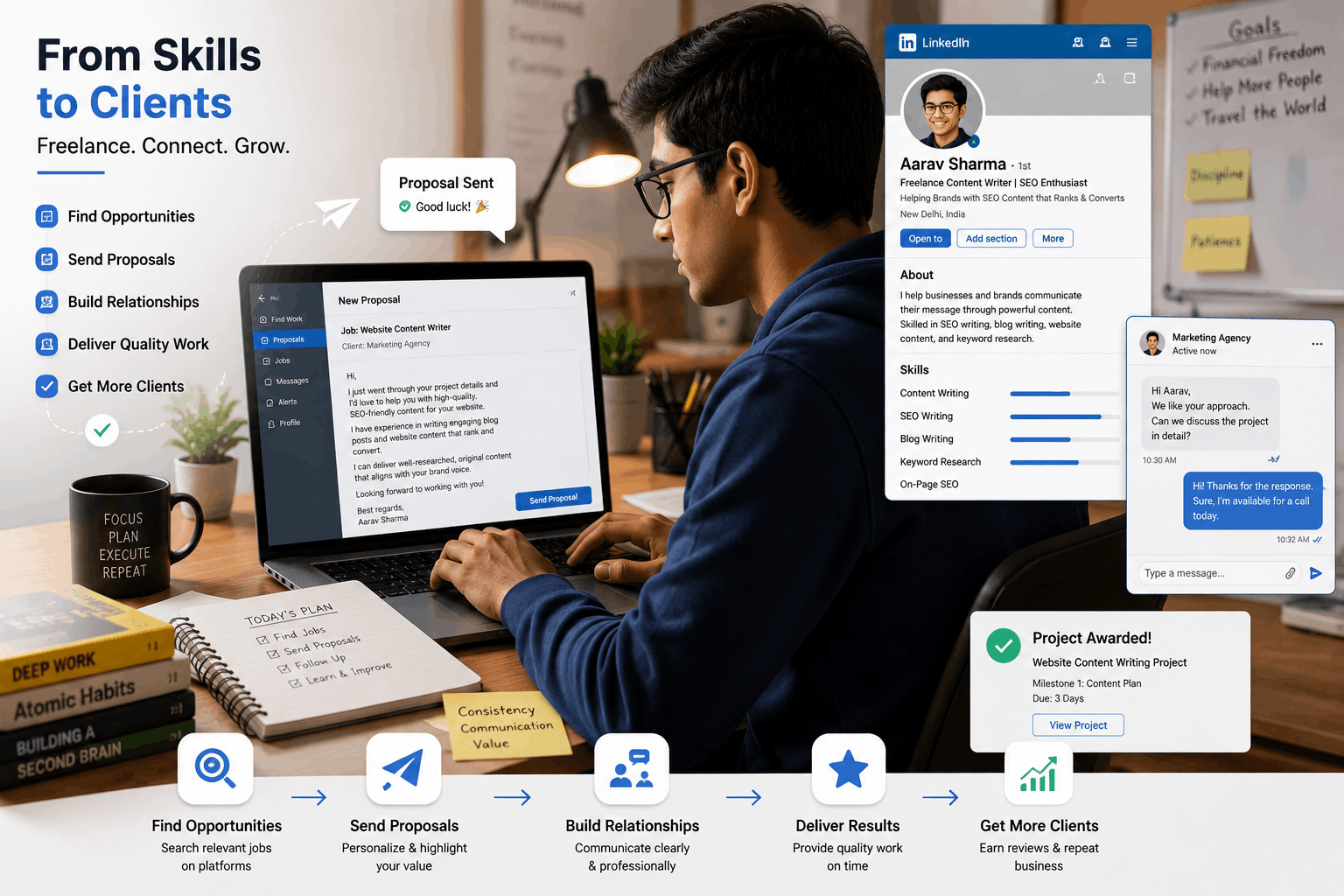
Freelancers really struggle when they first start out – finding those initial clients is super tough. Many folks get caught up in making their profiles look perfect, yet forget to actually hunt for clients.
The key is reaching out to potential clients constantly. It takes effort to track down the right people who need what you offer.
First, identify businesses or individuals that could use your services. Research their specific needs too. Then craft unique, personalized messages.
Avoid generic pitches like, “I'm looking for work.” Instead, focus on three main points:
Explain the problem they're facing
Show how you can fix that issue
Make clear why your solution is worthwhile
Sending a personalized message often gives way better results than a one-size-fits-all approach. Personal touches stand out more.
Remember, landing your first client might take time and patience. But each outreach attempt builds your skill set. You get better at communicating and selling yourself with practice.
Writing Better Freelance Proposals
Your proposal often decides if clients respond or not.
An effective one zeroes in on what the client needs, not what you offer.
It should explain how you'll fix their issue, not just list your skills.
Strong proposals usually start with a personal intro, show project understanding, highlight relevant experience, propose a solution, and wrap up with the next steps.
Always keep it concise, professional, and full of value.
Delivering High-Quality Work
Securing a client is just the start. To succeed in the long run, you've got to keep up that great work. Clients appreciate freelancers who meet deadlines, communicate clearly, follow instructions, take feedback professionally, and show reliability.
All this makes your reputation super valuable. It also leads to more than just repeat business; you get referrals and stronger pro relationships too.
Managing Freelancing Alongside Academic Responsibilities
Balancing freelancing with studies requires careful planning.
One of the biggest mistakes students make is accepting more projects than they can realistically handle.
Create a schedule that accounts for:
Classes
Study sessions
Assignments
Exams
Freelance projects
Personal time
Using productivity tools can help improve organization.
Popular options include:
Google Calendar
Notion
Trello
Asana
Time management is a skill that improves with practice.
Learning to balance multiple responsibilities effectively can benefit both your academic and professional life.
Common Challenges Student Freelancers Face
Every freelancer faces hurdles. Students in particular often struggle with self-doubt. Many think they aren't qualified, but focusing on getting better and gaining hands-on experience helps a lot. Rejection happens too – not all proposals get accepted. Yet, it’s okay because each no gives you a chance to learn and improve. Juggling academic duties makes managing time tough. Still, planning ahead and setting reasonable goals can keep everything under control. The field is super competitive, yet clients usually care more about reliability and your ability to solve problems rather than having the cheapest rates.
Growing Beyond Your First Few Projects
After completing several projects, focus on long-term growth.
Begin refining your processes and identifying areas for improvement.
Ask yourself:
Which projects did I enjoy most?
Which services generate the best results?
What skills should I improve next?
As your experience grows, consider:
Specializing in a niche
Expanding your portfolio
Building long-term client relationships
Creating case studies
Strengthening your personal brand
Consistent improvement often produces better results than chasing rapid growth.
Final Thoughts
Freelancing as a student goes beyond just finding gigs; it's a chance to pick up real skills, boost confidence, rack up professional experience, and set yourself up for a smoother start in your career later on.
The folks who succeed in student freelancing aren't always the brightest right off the bat. Rather, it's those dedicated to honing their craft, putting in steady effort, and being on top of their game with communication. They continually strive to be better.
Kick things off by mastering one skill. Next, put together a portfolio. Make sure to craft a pro-looking online profile. Then start networking and looking for those initial clients. And importantly, soak up every bit of knowledge each job and chat with clients brings.
By doing freelance work, you walk away from university with more than a diploma. You've got practical know-how under your belt, a heap of confidence, and a showpiece of actual work to wow future employers.
So, jump in as soon as you feel ready. All accomplished freelancers began somewhere, and all awesome freelance journeys start with that very first project. To dive deeper, check out our guide on entry-level writing and blogging jobs.
Frequently Asked Questions
Tags

Sharik Rasool
Verified AuthorSenior Freelance SEO & Editorial Link Building Specialist
Sharik Rasool is a senior SEO strategist and manual outreach link builder with over 8 years of hands-on experience scaling search rankings for SaaS, tech startups, and digital publishers. Having secured 500+ high-authority DR50–85+ editorial placements, he specializes in data-backed technical audits, competitor backlink gap matrices, and white-hat outreach systems.