Understanding the Pros and Cons of Freelancing in Today’s Job Market
Table of Contents

Freelancing has changed the manner in which employees work. Freelancing concepts like working from home or online jobs have become popular across the globe. This is the reason why many employees are opting for the freelancing method of working as opposed to the conventional method of employment.
However, freelancing is not entirely an effective way for all individuals.
Before making the transition from the secure world of full-time work to the freelance world, you must know the ins and outs of freelancing. This article is an attempt to touch every nook and corner related to freelancing, including pros and cons of freelancing.
Whether you are a developer, designer, writer, marketer, consultant, or an entrepreneur looking to increase your revenue streams, this in-depth blog will aid you in understanding if freelancing is right for you.
What Is Freelancing?
Freelancing, therefore, basically is the method of being self-employed by offering one's skills and services to numerous clients without necessarily being tied to an employer. Normally, freelancers work on a contract, project, or hourly basis.
Common Freelance Occupations
Software Engineering
Web & app design
Content Writing & SEO
Digital marketing
Video Editing & Animation
Consulting & coaching
Virtual assistant
Freelancers will work in remote, on-site, or hybrid environments depending on the client's needs.
Why Freelancing Is Growing Rapidly
It is only possible to make sense of the pros and cons of freelancing by first grasping the reasons why freelancing has gained such popularity. This is because:
Major Growth Drivers
Rise of remote work culture
Rise ofremote work culture
Access to international clients
Digital payment systems
Remote work platforms like Upwork, Fiverr, and
Companies prioritizing flexible talent over full-time employees
This has led to both opportunities and challenges for freelancers globally.
Pros of Freelancing
Let us begin with the benefits. The pros of freelancing forms the reason why people leave their employment as employees or workers.

1. Flexibility of Work Schedule
One thing that makes freelancing so attractive is flexibility.
Freelancers can:
Work when they want
Flexible working times, no rigid 9 to 5 schedule
Conduct work during the peak productivity times
This enhances work-life balance, mainly in the case of parents, pupils, or remote workers.
2. Choice of Projects & Clients.
As opposed to the traditional work arrangement, freelancers
Choose projects they are interested in
Do Not Accept Low Paying/Misaligned Cases
Engage in niches they are passionate about
This provides autonomy, which contributes to enhanced job satisfaction and job control.
3.Unlimited Earning Potential
In freelancing, earnings are not capped by a specified amount of salary.
Your income depends on:
Skill level
Demand for your service
Pricing strategy
Scalability of offering (solo, packages, agencies)
Skilled freelancers can earn more than regular professionals in that industry.
4. Working Remotely from Anywhere
Freelancing makes it possible to work remotely
You can work:
From home
From coworking spaces
While traveling internationally
This is particularly appealing to digital nomads and people who work remotely first.
5. Diverse Skill Development
Freelancers assume multiple roles:
Sales
Marketing
Finance
Client management
Project delivery
This enhances learning and allows freelancers to be adaptable professionals.
6. Work Life Integration
Rather, freelancers have the ability to:
Attend Personal Events
Take breaks when needed
Design an ideal work day
This is certainly one of the least utilized pros of freelancing.
Cons of Freelancing
Although the pros could be alluring and enticing, it’s essential to know the cons associated with the concept of freelancing.
1. Income Instability
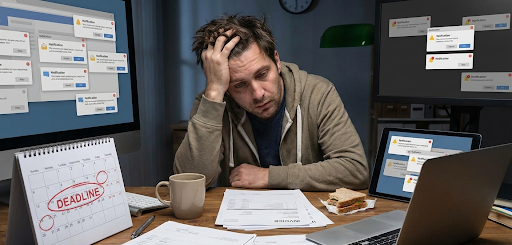
The largest con of freelancing is the uncertain income.
Challenges include:
Irregular Payments
Seasonal demand
Loss of client
Contrary to working as an employee, the individual does not have a fixed monthly paycheck.
2. No Employee Benefits
Freelancers don’t get:
Health insurances
Paid leaves
Retirement Benefits
Bonuses
All benefits must be self-funded, which enhances financial accountability.
3. High Competition
Freelancing marketplaces are very crowded.
You compete with:
Global talent
Low-cost providers
AI-based services
To differentiate, it is necessary and important that there be strong branding, specialization, and continuous upskilling
4. Self-Discipline and Burnout
Freelancers have to contend with
Deadlines
Distractions
Motivation
Without discipline, productivity will be compromised. Exerting too much effort might lead to burnout.
5. Client Management Stress
Not all the customers are easy to serve.
Common issues:
Scope creep
Delayed Payments
Poor communication
Unrealistic Expectations
Managing clients is one of the toughest aspects of doing freelance work.
6. Administrative Overload
In the freelancer model, the freelancer
Invoicing
Taxes
Contracts
Legal Compliance
Marketing
Such work is time and energy consuming.
Financial Planning and Taxes in Freelancing
One of the most underrated points that need to be weighed while making a list of pros and cons of freelancing is financial planning. The fact is that freelancing is a mode of working that requires freelancers to handle their personal finances and taxes by themselves. They do not have to think or worry about these issues, unlike employees, who have their taxes and finances managed by their companies. The nature of freelancing is irregular, and freelancers need to make extra efforts to manage their finances effectively. They need to save money for income tax, professional tax, and other taxes depending upon their country’s laws. Other overheads, such as software, internet bills, and personal or professional development, need to be budgeted for well in advance. If freelancers fail to do financial planning, they may struggle hard despite earning a lot of money.
Skill Development and Career Growth in Freelancing
Another significant aspect which should be kept in mind for understanding the pros and cons of freelancing as a form of employment relates to personal career advancement. Whereas in a conventional employment opportunity, there are predetermined ways for advancement and learning new skills, in freelancing, it becomes the sole responsibility of the individuals to manage their progress in their chosen career. This requires individuals to update themselves with the latest developments in their sectors in order to stay ahead in the competition. Freelancers who do not remain updated may find it difficult to find quality projects, whereas those who choose to learn often find it easy to shift to more lucrative sectors in less time. Though it becomes an investment of time and money for individuals, it also provides an opportunity for freelancers to manage their own career without going for promotions.
Pros and Cons of Freelancing vs Full-Time Jobs
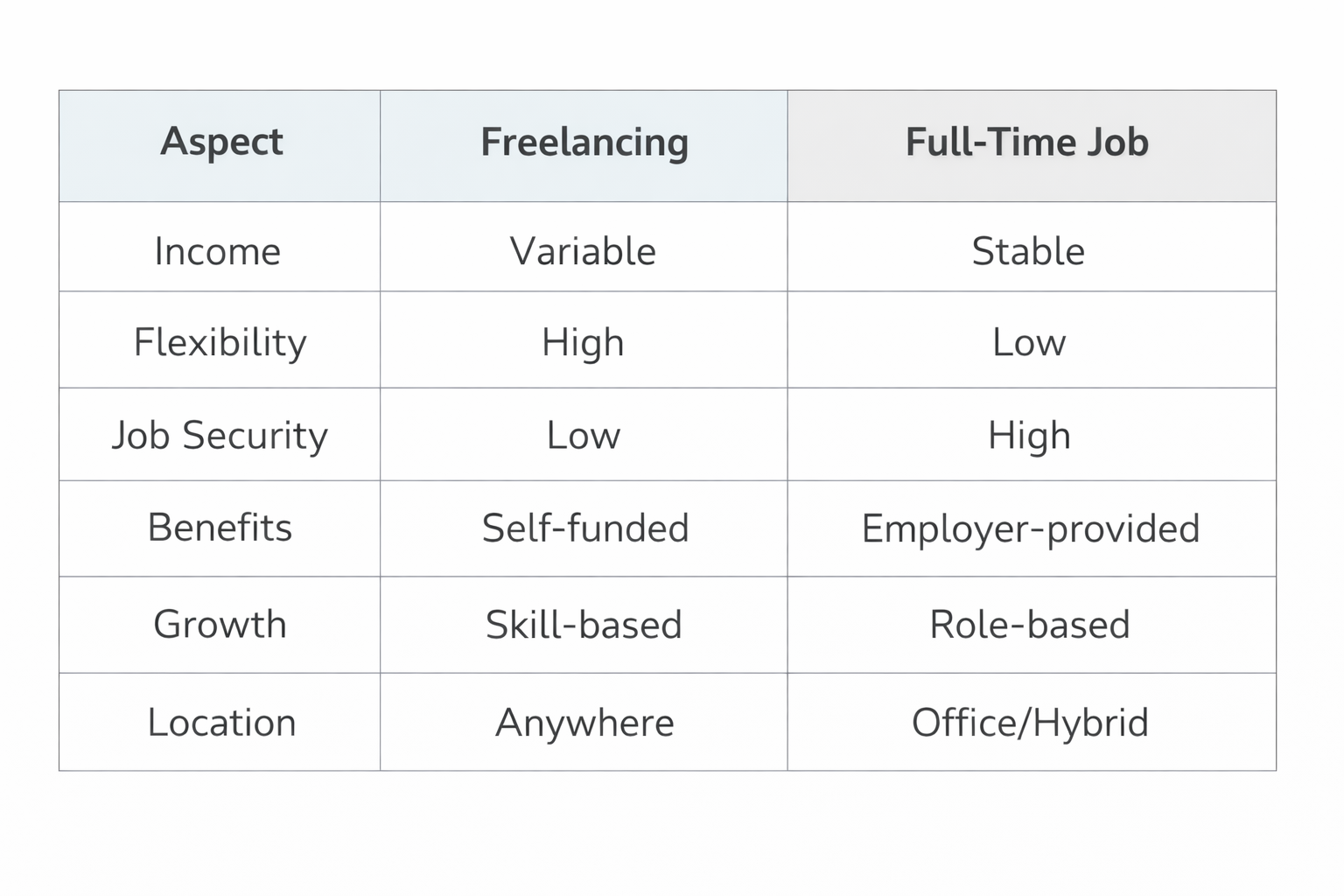 Understanding this comparison helps professionals decide what suits them best.
Who Should Opt For Freelancing?
Freelancing suits the following individuals:
Autonomously motivated
Skilled professionals
Risk-taking personalities
Individuals requiring flexibility
Persons with financial planning skills
Who Should Avoid Freelancing?
Freelancing may not suit:
People who require a steady income
Those who dislike or avoid uncertainty
Experts who like organized settings
People lacking self-discipline
It is important to know yourself when weighing the pros and cons of freelancing.
How to minimize the cons of freelancing.
While freelancing has cons, they can be managed amicably.
Practical Solutions
Build up an emergency fund which must at least be 6 months
Diversify clients
Use a contract for every project
Invest in health insurance
Automate invoicing and accounting
Set boundaries at work
Smart planning reduces risks of freelancing by a big margin.
Is Freelancing Sustainable Long-Term?
Yes - if treated as a business.
Successful freelancers:
Creating Personal Brands
Build Multiple Income Streams
Provide premium services
Shifts to the agency or consultancies
Freelancing is no longer a short-term employment solution, it’s actually a career.
Conclusion: Should You Go for Freelancing?
Before making a career decision, it is crucial to make it very clear whether freelancing has more pros or cons.
What freelancing offers is:
Freedom
Flexibility
Financial growth potential
But it also requires:
Discipline
Planning
Emotional resilience
If you are willing to treat freelancing as a business, and not just a job, it can be one of the most rewarding career paths available today.
Frequently Asked Questions
Tags
Written by Sharik Rasool
Sharik Rasool is an experienced SaaS SEO Strategist and Editorial Link Builder with over 7 years of hands-on experience. He helps tech brands, B2B startups, and digital creators build domain authority and unlock compound organic traffic growth. Through personalized outreach and database audits, Sharik has helped scale search engine rankings and earn high-quality backlink profiles.