Mastering SEO Strategies for Local Business: A Comprehensive Guide
Table of Contents
Introduction to Local SEO
As a local business owner, a strong online presence is essential for attracting new customers and staying ahead of the competition. Local search engine optimization, or local SEO, is one of the most effective ways to achieve this. This article will provide you with valuable insights, tips, and strategies to improve your online visibility and drive more sales. Local SEO is a subset of search engine optimization that focuses on optimizing a website to rank higher in local search results, making it a key component of any small business's digital marketing strategy.
Local SEO involves a range of techniques, including keyword research, on-page optimization, link building, and local citation building, all designed to help your business appear in the top search results for location-based searches. By implementing effective local SEO strategies, you can increase your online visibility, drive more foot traffic to your store, and ultimately boost your sales. Whether you're a small business owner, a marketing professional, or simply looking to improve your online presence, this article will give you the knowledge and expertise you need to succeed in local SEO.
What is Local SEO?
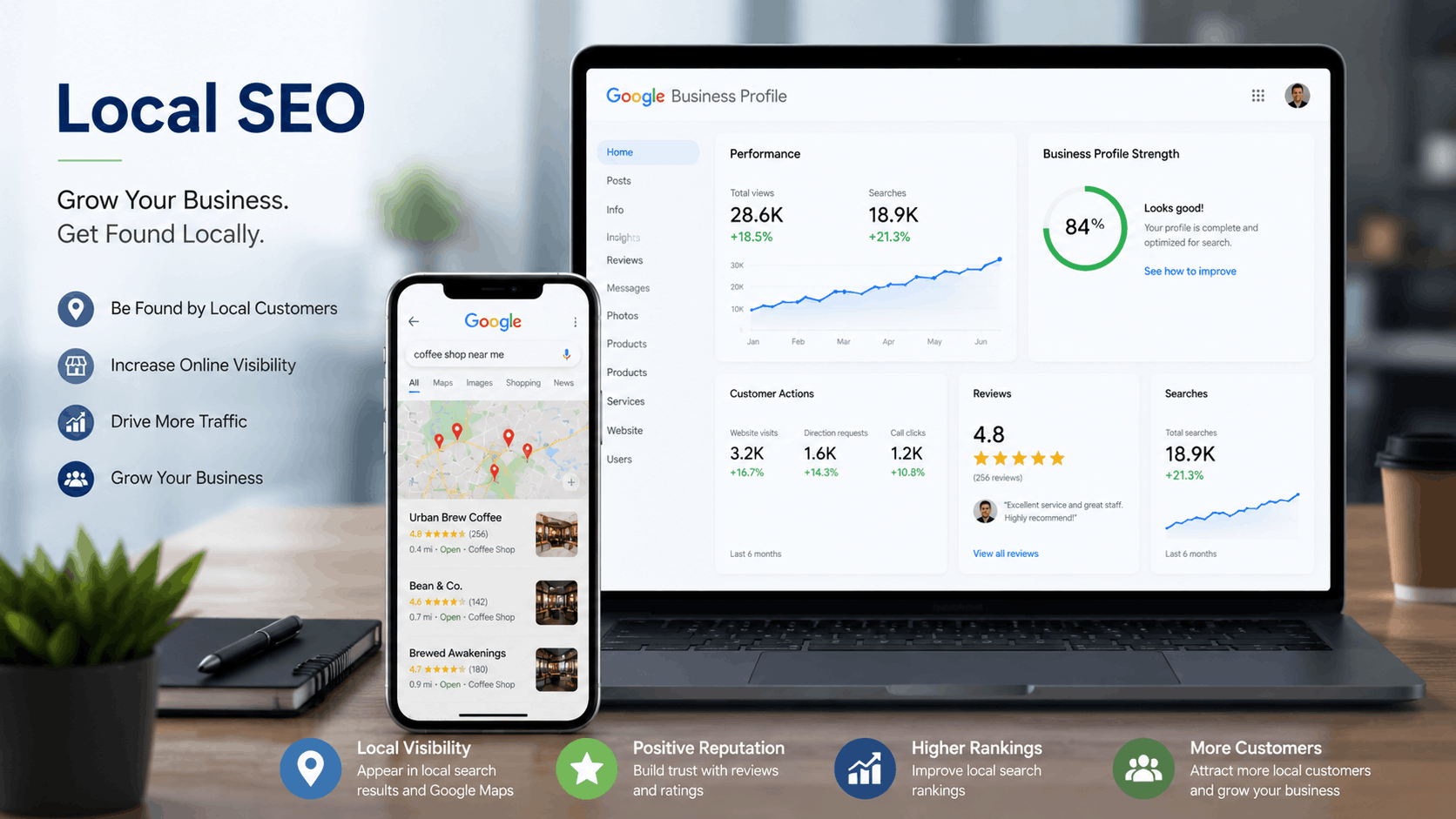
Local SEO helps businesses promote their products or services to local customers by optimizing their website and online presence to rank higher in local search results. These results are typically displayed on a map, along with your business's name, address, and phone number. This allows you to target customers searching for products or services in your area, making it an effective way to attract new customers and drive sales. The benefits of local SEO include:
- Increased online visibility for your business
- Improved search engine rankings for location-based searches
- More foot traffic to your store or office
- Higher conversion rates and sales
- A competitive edge over other local businesses
Optimizing your website for local SEO can improve your chances of appearing in the top search results for location-based searches, such as "coffee shops near me" or "plumbers in [city name]". You can achieve this through various local SEO tips and techniques, including small business SEO strategies, local search engine optimization best practices, and expert advice on SEO for local companies.
Why is Local SEO Important for Small Businesses?
Local SEO allows small businesses to compete with larger companies and reach local customers searching for products or services in their area. By optimizing their website and online presence, small businesses can increase their online visibility, drive more foot traffic to their store, and boost their sales. Local SEO is also an effective way to target customers ready to make a purchase, as they're typically searching for products or services in their local area. Some key reasons why local SEO matters for small businesses include:
- Local business marketing is highly targeted, allowing you to reach customers in your area
- Local SEO is a cost-effective way to promote your business, as you can optimize your website and online presence without expensive advertising
- Local SEO helps you build a strong online reputation, essential for attracting new customers and driving sales
- Local SEO can help you stay ahead of the competition, as many small businesses haven't yet optimized their website and online presence for local SEO
By implementing effective local SEO strategies, small businesses can improve their online visibility, drive more sales, and stay ahead of the competition. In the next section, we'll explore local SEO in more depth, providing you with valuable insights, tips, and strategies to improve your online presence and drive more sales.
Understanding Local Search Engine Optimization
For small businesses, local search engine optimization (SEO) is essential to reaching customers in their area. To succeed, it's vital to understand how local search works and what factors influence local search rankings. In this section, we'll explore the basics of local SEO and provide you with practical tips to boost your online presence and stay competitive.
Local SEO is a specialized form of SEO that helps businesses rank higher in local search results. This is especially important for small businesses, as local customers often search for products or services nearby. By optimizing their website and online presence, small businesses can increase their visibility, drive more foot traffic, and increase sales. Targeting local customers is an effective way to reach people who are ready to make a purchase, as they're often searching for products or services in their area.
How Local Search Works
When you search for a product or service in your area, the search engine uses an algorithm to rank websites based on relevance, distance, and prominence. The results include a map and a list of local businesses that match your search query. The search engine also considers your location, using your IP address or device location to determine how close you are to the listed businesses. This is why local SEO is so important for small businesses - it helps them reach local customers who are searching for products or services in their area.
The local search algorithm considers a range of factors, including a business's online reputation, its presence in local directories, and the quality of its website. To improve your chances of ranking higher in local search results, focus on optimizing your website and online presence. Some key strategies include:
- Using location-specific keywords in your website's content and meta tags
- Claiming and optimizing your Google My Business listing
- Building high-quality backlinks from local directories and other relevant websites
- Optimizing your website's content and structure to improve user experience and search engine crawlability
Key Factors Influencing Local Search Rankings
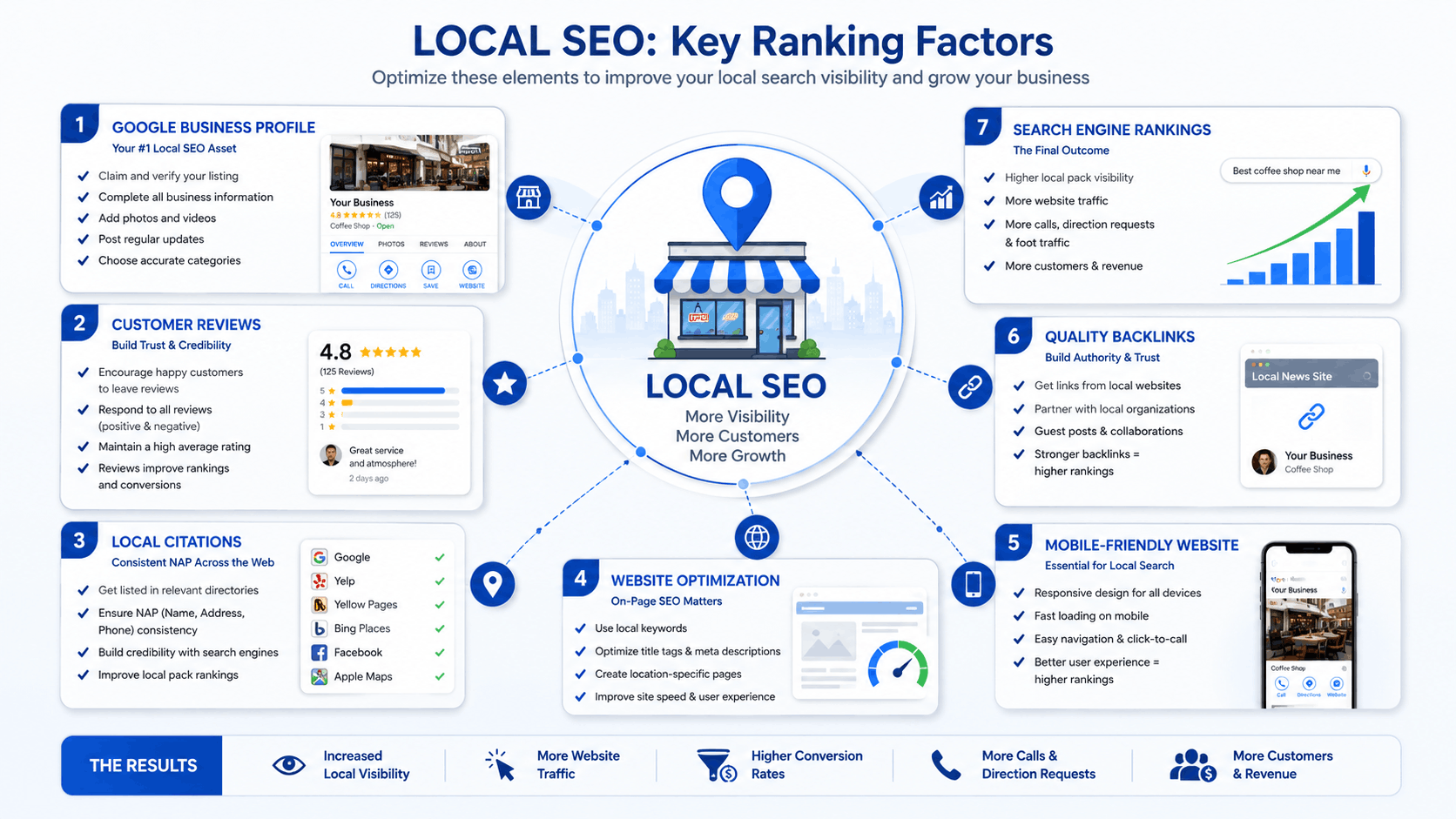
A business's online reputation, presence in local directories, and website quality all impact local search rankings. Some of the most important factors to consider include:
- Google My Business listing: Claiming and optimizing your listing allows you to manage your online presence and provide users with essential information like hours, address, and contact details.
- Online reviews: Reviews give users an idea of a business's quality and reputation. Encourage customers to leave reviews on your Google My Business listing and other relevant platforms to improve your local search rankings.
- Local citations: Mentions of your business's name, address, and phone number on other websites, such as local directories and review sites, can improve your local search rankings and increase your online visibility.
- Website quality: A well-designed website indicates a business's professionalism and expertise. Optimizing your website's content and structure can improve user experience and search engine crawlability, leading to better local search rankings.
By understanding these factors and implementing effective local marketing strategies, small businesses can increase their online visibility, drive more sales, and stay ahead of the competition. In the next section, we'll dive into advanced local SEO strategies and provide you with valuable tips to take your local SEO to the next level.
Setting Up Your Local Business for SEO Success
To set your local business up for SEO success, you'll need to combine strategic planning, technical optimization, and ongoing management. The steps outlined in this section will help you boost your online visibility, climb the local search rankings, and ultimately drive more sales. A key part of this process is claiming and optimizing your Google My Business listing, as well as building high-quality local citations. These elements work together to give users accurate and consistent information about your business, while also signaling to search engines that your business is legitimate and worthy of inclusion in local search results.
As a local business owner, understanding the impact of local search engine optimization on your online presence is vital. Effective local SEO can improve your website's visibility, drive more targeted traffic, and increase your chances of converting visitors into customers. Whether you're a small business owner or a marketing professional, grasping thefundamentals of small business SEO is essential for success in the competitive online landscape. By implementing the right strategies, you can give your business a significant edge.
Claiming and Optimizing Your Google My Business Listing
Claiming and optimizing your Google My Business listing is a fundamental step in setting up your local business for SEO success. This free service lets you manage your online presence, provide users with essential information like hours, address, and contact details, and respond to customer reviews. To get started, visit the Google My Business website, search for your business, and follow the verification process. Once you've claimed your listing, optimize it by adding high-quality photos, accurate information, and relevant categories. This is also a great opportunity to showcase your business's unique features and services, and to give users a clear call-to-action.
When optimizing your Google My Business listing, focus on the following key elements:
- Accurate and consistent NAP (Name, Address, Phone Number) information: Make sure your business's NAP information is accurate and consistent across all online platforms, including your website, social media profiles, and local directories.
- High-quality photos and videos: Add high-quality photos and videos to your Google My Business listing to showcase your business's products, services, and facilities.
- Relevant categories and keywords: Choose relevant categories and keywords to help users find your business when searching for specific products or services.
- Up-to-date hours and contact information: Keep your business's hours and contact information up-to-date, including your phone number, email address, and physical address.
Optimizing your Google My Business listing can significantly improve your local search rankings, increase your online visibility, and drive more targeted traffic to your website. This is a key part of local search engine optimization, and it should be a top priority for any local business looking to succeed online.
Building High-Quality Local Citations
Building high-quality local citations is another essential step in setting up your local business for SEO success. Local citations refer to mentions of your business's name, address, and phone number on other websites, such as local directories, review sites, and industry-specific platforms. These citations help increase your online visibility, improve your local search rankings, and provide users with a clear and consistent view of your business's information. When building local citations, prioritize quality over quantity, and focus on platforms that are relevant to your business and industry.
Here are some key tips for building high-quality local citations:
- Focus on relevance and authority: Prioritize local directories and platforms that are relevant to your business and industry, and that have a high level of authority and trust.
- Ensure consistency and accuracy: Make sure your business's NAP information is consistent and accurate across all local citations, and that you're using the same format and spelling throughout.
- Use a variety of platforms: Use a range of platforms to build your local citations, including local directories, review sites, and industry-specific platforms.
- Monitor and manage your citations: Regularly monitor and manage your local citations to ensure they're accurate and up-to-date, and to identify opportunities for improvement.
By following these tips and focusing on building high-quality local citations, you can improve your online visibility, increase your local search rankings, and drive more targeted traffic to your website. This is a key component of a successful local business marketing strategy, and it can help you stay ahead of the competition.
On-Page Optimization for Local Businesses
When it comes to local search engine optimization, on-page optimization is a key factor in helping your website rank higher in local search results. By fine-tuning your website's elements, you can boost your online presence, attract more targeted traffic, and increase the likelihood of turning visitors into customers. Here, we'll explore the importance of on-page optimization for local businesses, covering topics like keyword research, content creation, and meta tags, and provide actionable tips to enhance your online presence.
A well-optimized website helps search engines understand its content and structure, which directly impacts your search engine rankings. By refining your website's on-page elements, you can establish credibility, increase visibility, and drive more relevant traffic to your site. This is especially important for small businesses, as it can help them compete with larger corporations on a more level playing field.
Conducting Keyword Research for Local SEO
Keyword research is a fundamental step in on-page optimization. It involves identifying the words and phrases your potential customers use to search for products or services like yours. Thorough keyword research enables you to pinpoint the most relevant and high-traffic keywords, which can significantly improve your search engine rankings and drive more targeted traffic to your site. Some essential tips for conducting keyword research include:
- Identify location-based keywords: Incorporate location-based keywords, such as city or state names, into your research to improve your website's ranking in local search results.
- Use long-tail keywords: Utilize long-tail keywords that are more specific and less competitive, like "best Italian restaurant in New York City," to improve your website's ranking in search engine results.
- Analyze competitor keywords: Examine the keywords used by your competitors to identify gaps and opportunities in the market.
By conducting thorough keyword research, you'll lay a solid foundation for your on-page optimization strategy and increase your chances of ranking higher in local search results. This is a critical component of local SEO, as it helps businesses stay ahead of the competition and attract more targeted traffic.
Creating Content That Resonates with Local Audiences
High-quality, engaging content is vital to on-page optimization and local business marketing. Create content that speaks to your target audience, including blog posts, articles, and product descriptions. Some essential tips for crafting content that resonates with local audiences include:
- Use location-based language: Incorporate location-based language into your content to improve your website's ranking in local search results.
- Focus on local topics: Focus on local topics and issues that matter to your target audience, such as local events or news.
- Use a conversational tone: Adopt a conversational tone in your content to build trust and credibility with your audience.
By creating high-quality, engaging content, you'll improve your online visibility, drive more targeted traffic to your site, and increase the likelihood of converting visitors into customers. This is a key aspect of local SEO, as it helps businesses stay ahead of the competition and drive more sales.
Optimizing Meta Tags for Local Search
Optimizing meta tags is a crucial step in on-page optimization. Meta tags provide search engines with essential information about your website, including the title, description, and keywords. Some essential tips for optimizing meta tags include:
- Use location-based keywords: Incorporate location-based keywords into your meta tags to improve your website's ranking in local search results.
- Write compelling descriptions: Craft compelling and descriptive meta descriptions that accurately summarize your website's content and entice users to click through.
- Use a consistent tone: Maintain a consistent tone and style in your meta tags to build trust and credibility with your audience.
By optimizing your meta tags, you'll improve your online visibility, drive more targeted traffic to your site, and increase the likelihood of converting visitors into customers. This is a critical aspect of local search engine optimization, as it helps businesses stay ahead of the competition and drive more sales.
Content Marketing Strategies for Local SEO
For local businesses, content marketing is key to building trust and credibility with their target audience. It also helps improve online visibility and drives more targeted traffic to their site. By creating high-quality, engaging content, small businesses can significantly enhance their SEO, leading to increased conversions and sales. In this section, we'll explore effective content marketing strategies for local SEO, including developing a content marketing strategy, guest blogging, and content promotion.
To succeed with local SEO, focus on creating content that resonates with your local audience. This can include blog posts, articles, videos, and social media posts that provide value to your target audience. Doing so will help establish your business as a trusted authority in your industry and improve your online visibility. The goal of local search engine optimization is to provide a seamless user experience, and content marketing is essential to achieving this.
Developing a Content Marketing Strategy for Local SEO
A well-planned content marketing strategy enables local businesses to create content that drives real results. When developing your strategy, consider the following elements:
- Define your target audience: Identify your ideal customer, including their demographics, interests, and pain points.
- Conduct keyword research: Research relevant keywords and phrases your target audience uses to search for products or services like yours.
- Create a content calendar: Plan and schedule your content in advance, including blog posts, social media posts, and other types of content.
- Measure and track your results: Use analytics tools to measure the effectiveness of your content marketing strategy and make data-driven decisions to improve it.
A comprehensive content marketing strategy helps local businesses create content that drives real results. Understanding the importance of content marketing for local SEO is essential for success, whether you're a small business owner or a marketing professional. A strong online presence is critical for local companies, and content marketing is a key component of this.
Guest Blogging for Local Link Building
Guest blogging is an effective way to build high-quality backlinks to your website, a key aspect of local SEO. By writing guest posts for reputable websites in your industry, you'll establish your business as a trusted authority and build backlinks. When guest blogging for local link building, consider the following tips:
- Research relevant websites: Identify reputable websites in your industry that accept guest posts and have a high domain authority.
- Write high-quality content: Create well-researched, engaging, and informative content that provides value to the website's audience.
- Include a link to your website: Include a link to your website in your author bio or within the content itself, but make sure it's relevant and natural.
Guest blogging for local link building improves your website's authority and ranking in local search results. This helps drive more targeted traffic to your site and increase conversions, a critical aspect of local business marketing.
Promoting Your Content to Local Audiences
Promoting your content to local audiences is essential for driving real results from your content marketing strategy. By promoting your content, you'll increase your online visibility, drive more targeted traffic to your site, and establish your business as a trusted authority in your industry. Consider the following content promotion strategies:
- Social media marketing: Share your content on social media platforms to reach a wider audience and drive engagement.
- Email marketing: Share your content with your email list to drive traffic to your site and increase conversions.
- Influencer marketing: Partner with local influencers to promote your content to their followers and increase your online visibility.
By promoting your content to local audiences, you'll drive real results from your content marketing strategy and improve your local SEO. Implementing these content marketing strategies will help improve your online visibility, drive more targeted traffic to your site, and increase conversions, ultimately leading to success for your local business.
Technical SEO for Local Businesses
High-quality content and effective content promotion strategies are essential for local business marketing, but they're only part of the equation. Your website's technical aspects also play a significant role in improving its visibility, credibility, and user experience. For local businesses, this means focusing on the technical details that can make or break your online presence. In this section, we'll dive into the key technical SEO aspects that can help local businesses thrive, including mobile-friendliness, page speed, and website security.
By implementing technical SEO strategies, you can significantly boost your website's online visibility, drive more targeted traffic, and increase conversions. As a local business owner, prioritizing technical SEO is key to staying ahead of the competition and establishing your business as a trusted authority in your industry. When you optimize your website's technical aspects, you'll see real results from your content marketing strategy and set your business up for success.
Ensuring Mobile-Friendliness for Local Search
Most local searches happen on mobile devices, so having a mobile-friendly website is no longer a nicety - it's a necessity. A mobile-friendly site provides a seamless user experience, making it easy for users to navigate and find what they need. To get started, consider the following:
- Responsive design: Make sure your website adapts to different screen sizes and devices with a responsive design.
- Page layout: Optimize your page layout so content is easy to access and read on smaller screens.
- Navigation: Simplify your navigation to help users quickly find what they're looking for.
A mobile-friendly website is essential for improving user experience, increasing engagement, and driving more targeted traffic to your site. This is a key part of local SEO and small business SEO, as it helps establish your business as a trusted authority in your industry.
Improving Page Speed for Better User Experience
Page speed has a huge impact on your website's user experience and search engine rankings. A slow-loading website can lead to high bounce rates, low engagement, and poor conversions. To speed things up, try the following:
- Optimize images: Compress and optimize your images to reduce file size and improve page load times.
- Minify code: Minify your HTML, CSS, and JavaScript code to reduce file size and improve page load times.
- Leverage browser caching: Use browser caching to store frequently-used resources locally and reduce the number of requests to your server.
Improving page speed provides a better user experience, increases engagement, and drives more targeted traffic to your site. This is essential for local businesses, as it helps improve your website's online visibility and establish your business as a trusted authority.
Securing Your Website with HTTPS
Website security is critical for protecting your users' sensitive information and preventing cyber attacks. Securing your website with HTTPS provides a secure connection between your website and users' browsers. To get started, consider the following:
- Obtain an SSL certificate: Get an SSL certificate from a trusted certificate authority to secure your website with HTTPS.
- Install the SSL certificate: Install the SSL certificate on your website to enable HTTPS.
- Update internal linking: Update your internal linking to point to the HTTPS version of your website.
Securing your website with HTTPS improves credibility, increases trust with your users, and drives more targeted traffic to your site. This is a key part of local business marketing and local search engine optimization, as it helps establish your business as a trusted authority and improves your online visibility.
Local SEO Tips and Best Practices
To boost your local SEO, you'll need a mix of technical optimization, high-quality content, and effective online marketing strategies. When you get these elements right, you can increase your online visibility, attract more targeted traffic, and establish your business as a trusted authority in your local market. Here, we'll dive into actionable tips for improving local SEO, including local link building and online reputation management - essential components of a successful local SEO strategy.
For small businesses, local search engine optimization is essential. It helps you reach customers in your area who are searching for products or services like yours. By optimizing your website and online presence, you can increase your chances of appearing near the top of search engine results pages for relevant keywords and phrases. This, in turn, drives more targeted traffic to your site, increases engagement, and ultimately leads to more sales and revenue.
Effective local SEO requires a solid understanding of how search engines work and how to tailor your online presence to meet the needs of local searchers. This means optimizing your website for local keywords, building high-quality local links, and managing your online reputation to build trust with your target audience. By following the right strategies, you can improve your online visibility, attract more targeted traffic, and establish your business as a trusted authority in your local market.
Building Local Links to Enhance Authority
High-quality local links are vital to local SEO. They help establish your business as a trusted authority in your local market and drive more targeted traffic to your site. To build these links, consider the following approaches:
- Partner with local businesses: Collaborate with other local businesses to build relationships and generate links to your website.
- Join local directories: List your business in local directories and citations to increase your online visibility and generate links to your website.
- Create high-quality content: Develop content that's relevant, useful, and attractive to other local websites and blogs, making them more likely to link to you.
- Optimize your website for local keywords: Use local keywords and phrases to increase your chances of appearing near the top of search engine results pages for relevant searches.
By building high-quality local links, you can improve your online visibility, drive more targeted traffic, and establish your business as a trusted authority in your local market. This is a key part of local business marketing, as it helps build credibility and trust with your target audience.
Managing Your Online Reputation for Local SEO
Your online reputation plays a significant role in local SEO, as it helps build trust with your target audience. To manage your online reputation effectively, consider the following strategies:
- Monitor online reviews: Keep an eye on online reviews and respond promptly to any negative feedback or comments.
- Encourage positive reviews: Encourage satisfied customers to leave positive reviews on your website or social media channels.
- Optimize your social media presence: Use social media to increase your online visibility and engage with your target audience.
- Use online reputation management tools: Utilize tools to monitor your online presence and respond quickly to any negative feedback or comments.
By taking control of your online reputation, you can build trust with your target audience, drive more targeted traffic, and improve your online visibility. This is a crucial aspect of local SEO, as it helps establish your business as a trusted authority in your local market and increases your chances of appearing near the top of search engine results pages for relevant keywords and phrases.
Measuring and Tracking Local SEO Success
To get the most out of your local SEO efforts, you need to measure and track their success. This means understanding how your strategies are impacting your online visibility and making data-driven decisions to improve. By keeping an eye on key metrics and using the right analysis tools, you can refine your approach to drive more targeted traffic, boost conversions, and establish your business as a trusted local authority. Tracking performance is essential for effective local business marketing, as it helps you identify areas for improvement and optimize your strategy.
It's not just about watching your website's traffic and rankings, though - it's also about understanding how your target audience interacts with your online presence. By analyzing key metrics and using the right tools, you can gain valuable insights into your local SEO performance and make informed decisions to enhance your online visibility. For local companies, this is especially important, as it helps you stay ahead of the competition and build trust with your audience.
Key Metrics for Measuring Local SEO Success
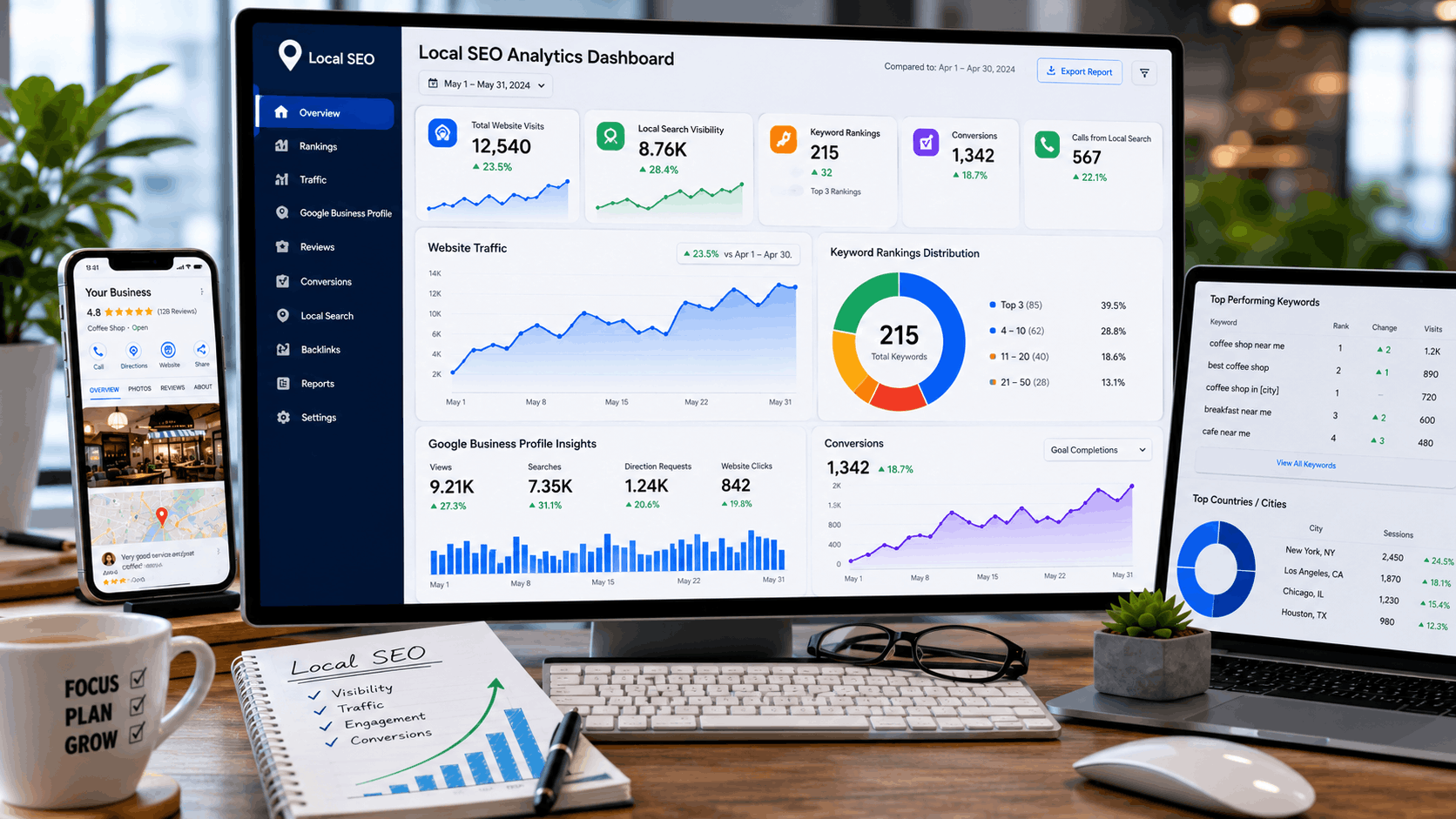
So, what metrics should you be monitoring? Here are a few key ones:
- Organic traffic: The number of visitors to your website from search engines, which gives you a sense of how well your local SEO strategies are working.
- Local search rankings: Your website's position in search engine results pages (SERPs) for relevant keywords and phrases, which affects your online visibility and credibility.
- Conversion rates: The number of visitors who complete a desired action, such as filling out a form or making a purchase, which shows how effective your local SEO strategies are at driving targeted traffic and generating leads.
- Online reviews and ratings: The number and quality of online reviews and ratings, which impact your online reputation and credibility.
- Google My Business insights: The performance of your Google My Business listing, including views, clicks, and interactions, which helps you understand how your target audience interacts with your online presence.
By monitoring these metrics, you can get a better sense of your local SEO performance and make informed decisions to improve your online visibility and drive more targeted traffic to your website. This process of tracking and refining your strategy is essential for achieving better results and building trust with your local audience.
Tools for Tracking and Analyzing Local SEO Performance
Luckily, there are many tools available to help you track and analyze your local SEO performance. Some of the most useful ones include:
- Google Analytics: A powerful tool for tracking website traffic, behavior, and conversion rates, which helps you understand the effectiveness of your local SEO strategies.
- Google Search Console: A tool for monitoring search engine rankings, impressions, and clicks, which gives you insight into your online visibility and credibility.
- SEMrush: A comprehensive tool for tracking and analyzing local SEO performance, including keyword rankings, technical SEO, and competitor analysis.
- Ahrefs: A tool for tracking and analyzing backlinks, keyword rankings, and content performance, which helps you understand your online reputation and credibility.
- Local SEO audit tools: Tools that help you identify and fix technical SEO issues, such as website speed, mobile responsiveness, and schema markup, which can improve your online visibility and drive more targeted traffic to your website.
By using these tools and monitoring key metrics, you can gain a deeper understanding of your local SEO performance and make informed decisions to improve your online visibility and drive more targeted traffic to your website. This will help you stay competitive and build a strong online presence in your local market.
Conclusion and Future of Local SEO
As we wrap up our guide to local SEO strategies, let's review the key points and look ahead to what's next for local search engine optimization. We've covered the importance of local SEO for small business owners and companies wanting to boost their online visibility and attract more targeted traffic to their website. Our discussion included various local SEO tips, such as optimizing your website for local keywords, building high-quality backlinks, and using local business listings to enhance your online reputation and credibility.
By putting these strategies into practice and using tools like Google Analytics, Google Search Console, SEMrush, Ahrefs, and local SEO audit tools to track and analyze your performance, you'll gain a better understanding of your online presence. This will enable you to make informed decisions to improve your local search engine optimization, stay competitive, and build a strong online presence in your local market - ultimately driving more sales and revenue for your business.
Recap of Essential Local SEO Strategies
Let's take a closer look at some essential local SEO strategies for small business owners and local companies:
- Optimize your website for local keywords and phrases, including your business name, address, and phone number
- Build high-quality backlinks from local directories, citations, and reviews
- Use local business listings, such as Google My Business, to improve your online reputation and credibility
- Use schema markup to help search engines understand your business and its location
- Create high-quality, engaging content that resonates with your target audience and provides value to your customers
Implementing these local SEO strategies and staying current with the latest trends and best practices will help you improve your online visibility, drive more targeted traffic to your website, and increase your chances of success in the competitive local market. For any local business, a strong online presence is the key to reaching your target audience - and investing in local SEO is a critical part of that.
The Evolving Landscape of Local Search Engine Optimization
Local search engine optimization is constantly changing, with new trends and technologies emerging all the time. To remain competitive, local business owners and companies need to stay ahead of the curve and adapt to these changes. Some key trends to watch in the future of local SEO include:
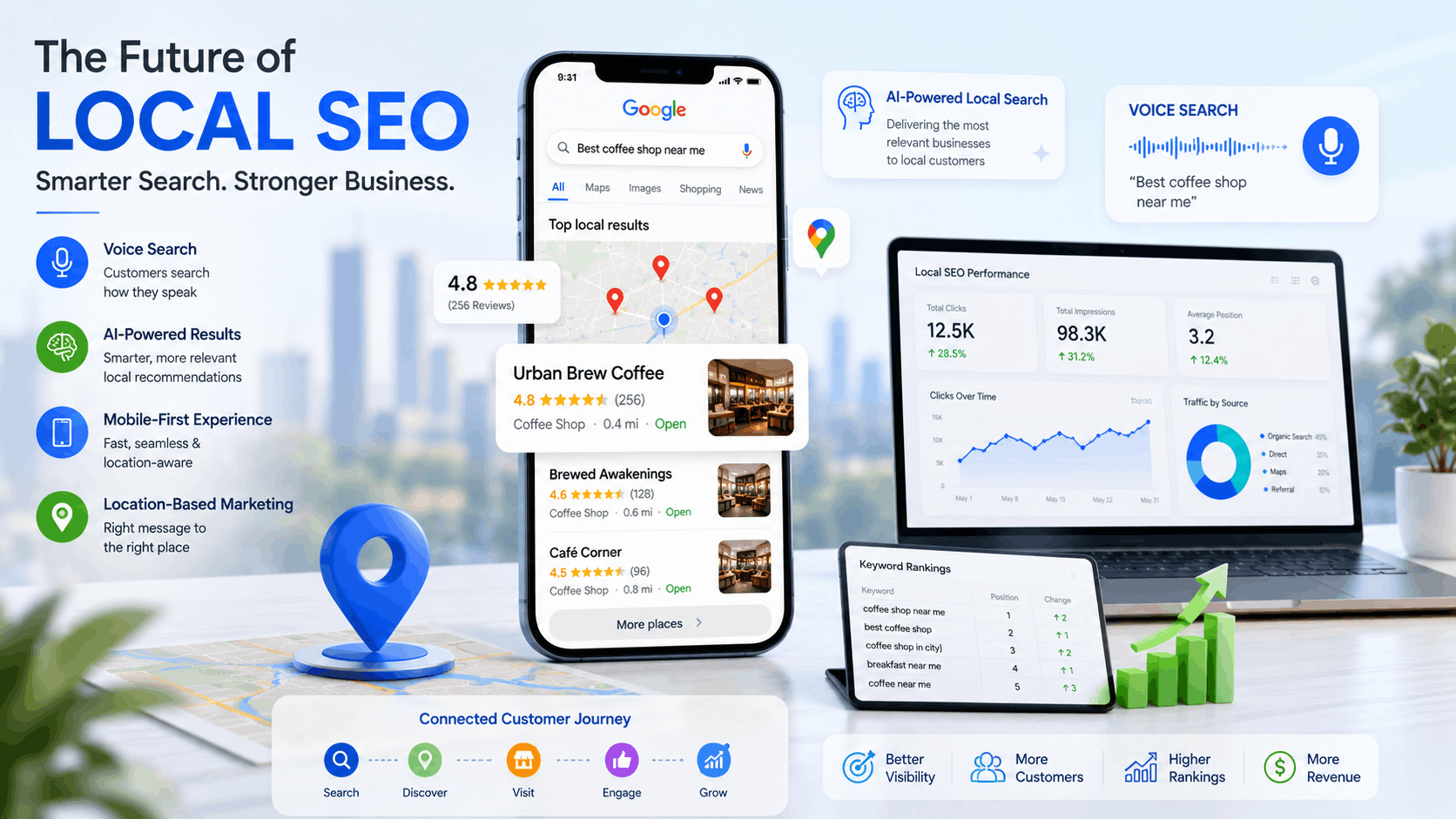
- Increased emphasis on voice search and mobile optimization, as more users turn to voice assistants and mobile devices to search for local businesses and services
- Greater importance of online reviews and reputation management, as customers rely on reviews and ratings to make informed decisions about local businesses
- More focus on technical SEO and website optimization, as search engines prioritize fast, secure, and mobile-friendly websites in their rankings
- Growing importance of local SEO for multi-location businesses, as companies with multiple locations look to optimize their online presence and reach their target audience in different markets
By staying current with these trends and adjusting your local SEO strategies accordingly, you can stay ahead of the competition and build a strong online presence that drives real results for your business. Our guide has provided you with the insights and knowledge you need to succeed in the competitive world of local SEO - whether you're looking for local SEO tips, small business SEO strategies, or expert advice on local search engine optimization.
Frequently Asked Questions
Tags
Written by Sharik Rasool
Sharik Rasool is an experienced SaaS SEO Strategist and Editorial Link Builder with over 7 years of hands-on experience. He helps tech brands, B2B startups, and digital creators build domain authority and unlock compound organic traffic growth. Through personalized outreach and database audits, Sharik has helped scale search engine rankings and earn high-quality backlink profiles.